Be Your Own Historian
One conviction, held since 2012, and what it predicts. In a world where intelligence is cheap and getting cheaper, the only thing that stays scarce is the record of a particular life.
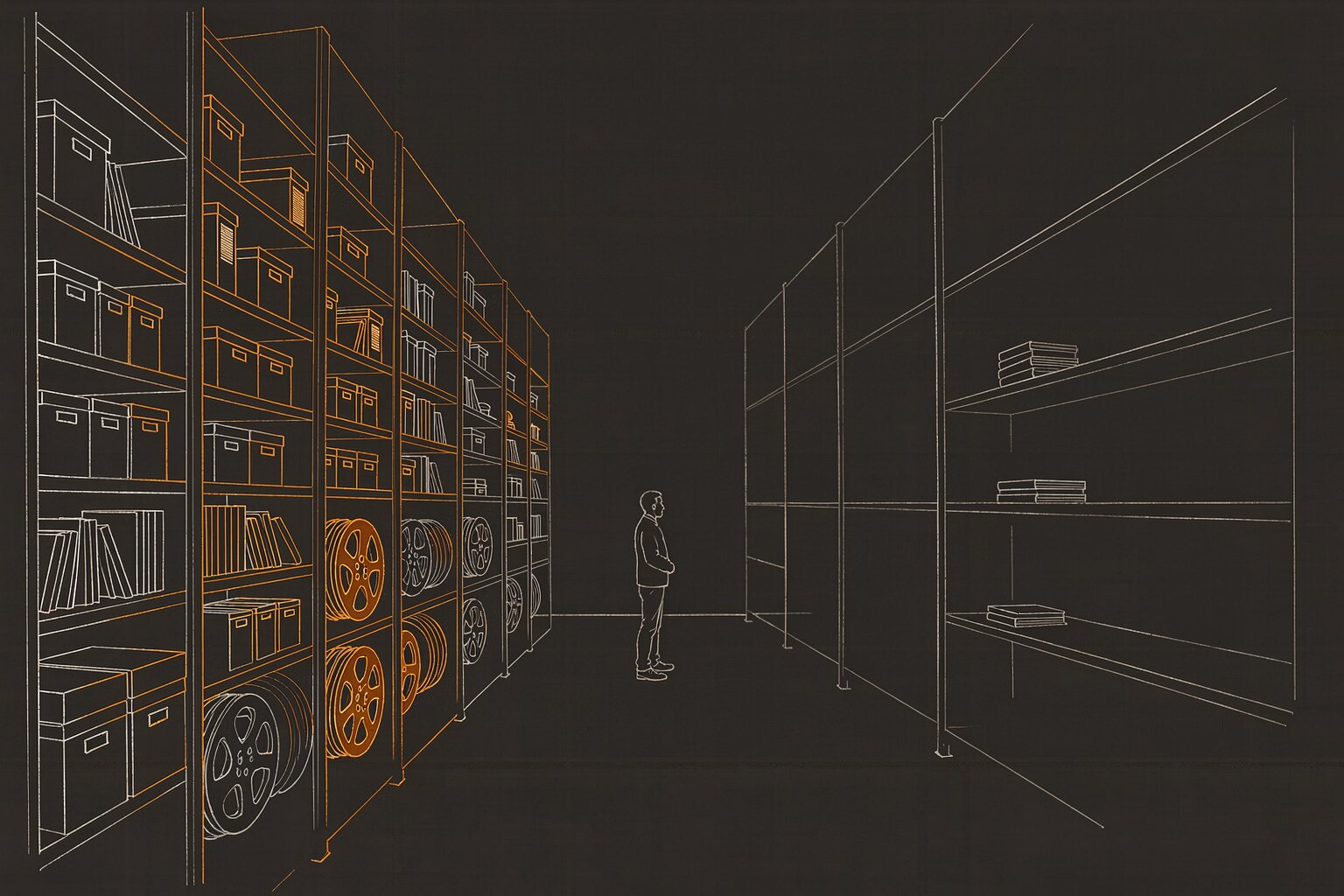
I have been saying a version of the same sentence for fourteen years, and the sentence has gotten shorter every year. It started as a product pitch. It is now four words: be your own historian.
Here is the long version, which I will spend the rest of this essay defending.
In a world where intelligence is cheap and getting cheaper, the only thing that stays scarce is the record of a particular life. It cannot be generated. It cannot be bought. It can only be kept. And the person who should own it is the person who lived it.
Everything I build is downstream of that.
Why I hold it
Not because I reasoned my way to it. Because I inherited it, and then I lost enough to understand what I had inherited.
In 1910 my great-grandparents met, and they began writing letters to each other. They wrote for two years. They married. One of their children was my grandfather, who wrote to my grandmother across an ocean during a war. My father wrote a letter to his mother every week for as long as I can remember, until she passed in 2018. He is still writing - to his brother and sisters now. Without meaning to, he documented my childhood - the small parts, the ones I don’t remember, the person I was becoming.
I have held that paper. Paper from 1910, paper from a warship, paper from a kitchen table on a Sunday afternoon. Four generations of my family understood something before I had words for it: the act of recording a life gives it meaning beyond itself.
In 2001 I helped my grandparents move to assisted living, and while they took one last drive through the places that made them, I sorted through the boxes. Negatives. Tin types from the 1870s. Film reels. Letters tied with ribbon. I became an archivist that afternoon and I have been one ever since - hundreds of VHS tapes, close to a hundred film reels, thousands of photographs.
That work taught me something I did not expect, and it is the part of the story I have been slowest to say out loud. The archive is not even. My mother’s side is documented in abundance; her father had an 8mm camera, and I can watch her as a girl on a fishing trip at a lake her grandparents had been coming to for decades. My father grew up poor on a farm in rural Nebraska. There was no camera. Very few pictures of him exist at all.
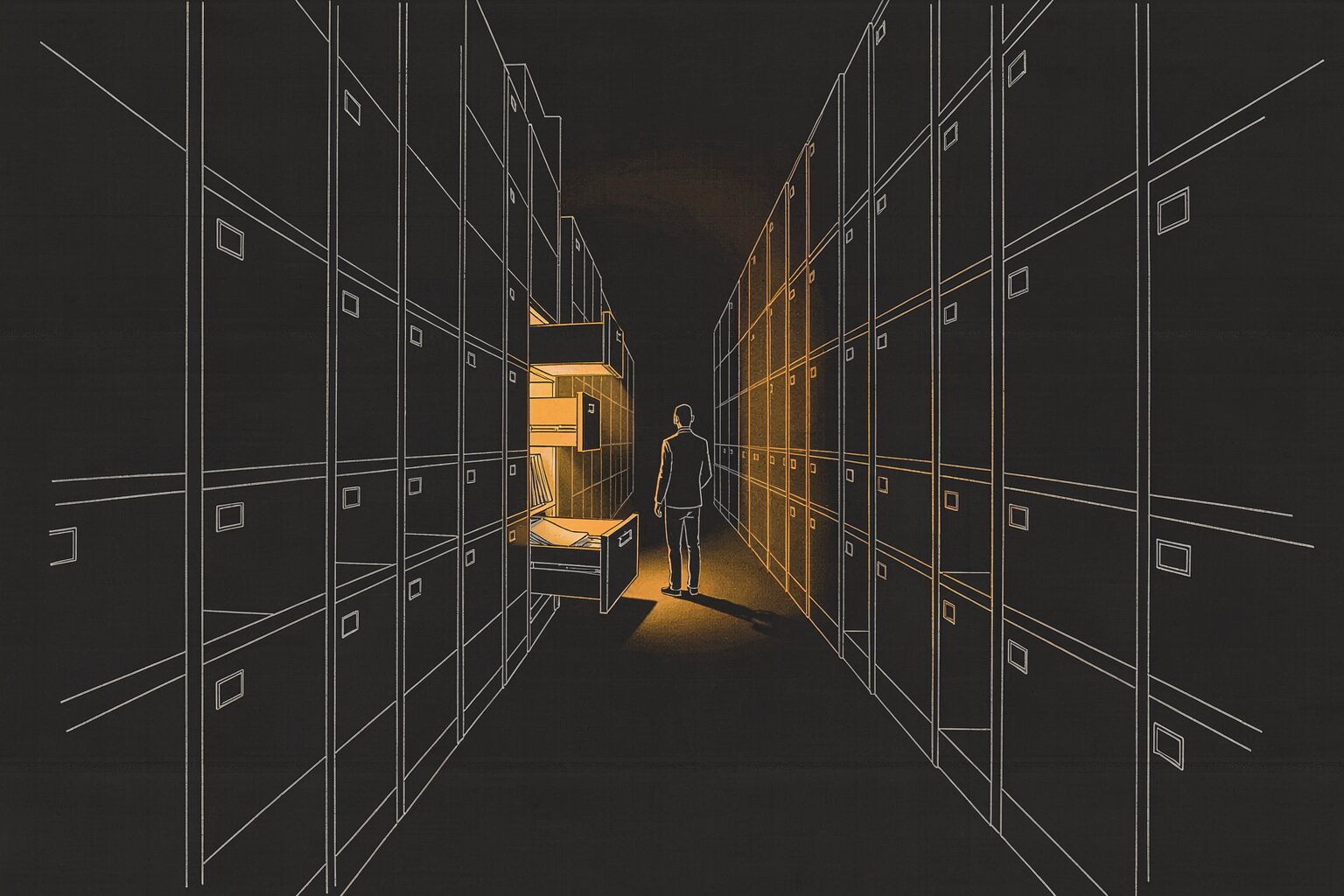
Two people, one generation apart, and one of them is legible and one of them is nearly not. That asymmetry is the whole argument. Whether a life leaves a trace is not a function of how much the life mattered. It is a function of whether anyone was keeping the record.
So I started keeping one. Around 2010 I began capturing deliberately: a Basis band on my wrist, a Garmin in my pocket, Foursquare check-ins at every corner, RunKeeper, Moves, later Automatic in the car, Narrative clipped to my shirt, Limitless on a lanyard. I believed the data was worth keeping. I was right about that.
I was wrong about who would keep it. Moves shut down. Basis was killed and recalled. Narrative dissolved. Automatic went away. Limitless was bought by Meta. Each time: the frantic export, the orphaned files, the formats nothing else can read, the promised importer that never came. I have years of my own life sitting in folders I can no longer open.
That is the evidence, and it is evidence of something narrower than it looks. It is not why I built what I built. I did not start because Moves died; I started because no platform like this ever existed in the first place. The shutdowns are proof that the impulse outlives the companies that try to serve it. They are not the motive. The motive is older and simpler: I want my kids to be able to know who I actually was on a Tuesday, the way I got to know my great-grandparents from their handwriting.
I tried to build it in 2012 and failed. I could not build it myself and I did not know how to properly bootstrap a build I could not do. Lesson learned. So in 2014 I went to a coding bootcamp in my mid-thirties and learned to close the gap myself, and in 2016 I started building the thing I have now used every single day for a decade.
What it predicts
If the conviction is right, some specific things follow. I have been watching them come true, which is the only reason I still hold it.
The processing layer stops being a moat. Two years ago, access to the models was the advantage. Now everyone has the refinery, the price falls every quarter, and the quality converges. Data is the crude, the models are the refinery, and the moat always moves upstream when refining goes commodity. Any company whose answer to “why you” is “we process documents well” is describing a feature the model will do natively in eighteen months.
What can’t be commoditized is the enriched record of a specific life. No model can generate it. It exists only because someone captured it, and it means something only because they layered their own context on top. Most people in this space are betting on the intelligence layer. I am betting on the substrate. They are building rendering engines. I am building the thing worth rendering.
Competitors will add more sources, and it will not matter. Journal apps take your writing and enrich it with data. Ambient recorders take a stream and hand you a summary. I am doing the opposite: the captured signal is primary, and your notes and tags and captions are the layer that makes the container yours. When someone adds another data source, the answer is not to add a source back. It is to sharpen the inversion. Your devices fill the container. Your thoughts make it yours.
The floor rises faster than people notice. There is a four-year-old Mac under my desk transcribing my dad’s letters at about forty-five seconds a page, and nothing leaves the house. I still use cloud models heavily, and for frontier work I always will. The local-only pose is wrong and I have watched it cost people their credibility. But the economics of a chip you already own are fixed, and the share of my own work that runs at home has climbed every month.
And the record keeps appreciating. A well-captured day is a document that gains value with time, because as the models improve, the same substrate gets richer for free. That is the quiet compounding nobody prices correctly.
What I’m doing about it
Building the container, and refusing several tempting exits.
Tractor and Silo captures the digital exhaust of a life across the devices already producing it, lets you enrich it with the who and the what and the why that only you can supply, and synthesizes it back into something you would actually want to read. Capture, enrich, synthesize - three verbs in that order. I did not design that sequence. I noticed it after a decade of doing it by hand.
I am honest about which lap I am on. Capture works. Enrichment works, and it is the habit I am inviting people into. Synthesis has been the promise for years and the first real pieces of it are running now, on-device where the work is repetitive and private. People with years of tracking behind them have been burned by overpromised platforms before. I would rather understate it.
I am not raising money. You pay for the service, the service stays running - no venture roulette. If I ever cannot maintain it, you get maximum notice and a full export of everything that is yours. I have been the person scrambling to save data from a dying service and I will not make anyone else be that person.
I am staying consumer. The enterprise version of this is the hottest category in software right now, and I have looked at it carefully and turned it down twice. Not because the thesis fails at company scale - it works fine - but because that product is built around procurement cycles and compliance checklists, and it would lose every internal fight to the thing I actually care about. The expansion I want is sideways, not upward: from one person’s record to a family’s.
I run all of it alone, with agents. Not because the tools are secret - they are all public - but because the skill that matters is organizational, not technical. AI did not replace my judgment. It removed the distance between having judgment and shipping something.
The test I apply to every decision is the same one I have used for years: will my children find this meaningful in thirty years? Not will it improve retention. Will the people who love me find it legible as evidence of a life actually lived.
That question kills a lot of ideas quickly, and it forces a time horizon most product thinking never reaches. Which is the point. My great-grandparents had no idea their letters would survive a century. They were just writing to each other. A hundred years later their great-grandson held the paper and felt like he knew them.
I do not know who will read the record of my days. But keeping it has made me more present in the living of them, and that is already worth the price. Everything after that is inheritance.