The Memex Has Been Waiting 80 Years for This Moment
Vannevar Bush described the memex in July 1945. It took 80 years to become buildable, because it required two things that didn't coexist until now: cheap private AI, and the conviction that data ownership is the last real moat.
In July 1945, an engineer named Vannevar Bush published an essay in The Atlantic called “As We May Think.” It is one of the strangest, most hopeful documents I know.
Bush had spent the war as the director of the U.S. Office of Scientific Research and Development. He oversaw the entire American scientific war effort: radar, the proximity fuse, penicillin manufacturing, and, indirectly, the work that would end the war the same month his essay was published. The atomic bombs fell on Hiroshima and Nagasaki in August 1945. Bush’s essay came out a few weeks earlier. He could feel what was coming. He wrote the essay anyway, and what he wrote was not a triumphal account of what science had done. It was an almost embarrassed argument that the same instruments scientists had built for destruction could be turned, just as easily, toward the preservation of human knowledge.
He proposed a machine. He called it the memex.
What Bush Saw
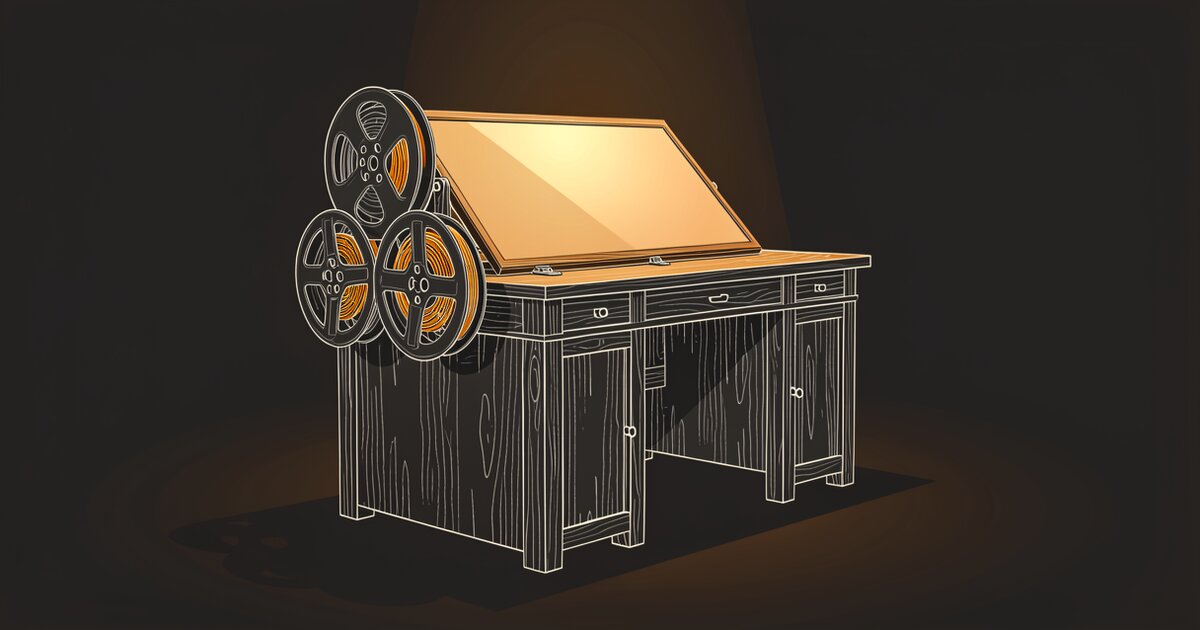
The memex, in Bush’s description, was a desk. Inside the desk were screens, levers, a keyboard, and microfilm. The owner of a memex would store inside it every book they read, every article that interested them, every photograph and letter and note they wanted to keep. They would project any item onto the screens at will. They would write annotations. And they would build associative trails between items. That is the part of the essay people remember. Linking one document to another and another, by hand, in patterns that reflected how their own mind moved.
The trails were the point. Bush was a working scientist, and what he understood was that the bottleneck on human knowledge wasn’t storage or printing or distribution. Those were all working fine. The bottleneck was the mismatch between how libraries were organized and how minds actually worked. A library catalogs a book in one place. A mind moves from a book to a memory to a question to another book to a piece of music to a face it once saw. The mind works by association. The library does not.
“The human mind,” Bush wrote, “operates by association. With one item in its grasp, it snaps instantly to the next that is suggested by the association of thoughts, in accordance with some intricate web of trails carried by the cells of the brain.”
The memex was Bush’s attempt to externalize that web. A personal device, owned by a single person, holding everything that person had ever read, heard, or thought, with the trails between items preserved forever. Not a public library. Not a search engine. A private and permanent record of an individual mind doing its work.
He thought it would take a few years. It took eighty.
Why It Never Got Built
The memex had three problems, and they came at the world in sequence.
The first was hardware. Bush was imagining microfilm because that was the densest storage medium in 1945, and even microfilm wouldn’t have been enough. The memex he described would have required a level of storage and miniaturization that wouldn’t exist for another forty years. The hardware caught up in the eighties and nineties. Disks got cheap. Personal computers became normal. By 2000, you could plausibly store the contents of a small library on a desk.
The second was software. Once the storage existed, the question became: how do you actually link things together at scale, in a way that doesn’t collapse into chaos? Hypertext came along. The web came along. Wikis. Personal note-taking apps. Roam, Obsidian, Notion. These were all real progress. But they all left the linking work to the user. You had to hand-build your own trails, and most people, including me, never had the time or discipline to do it well. The systems that promised a second brain mostly turned into graveyards of half-tagged notes.
The third problem was the one nobody talked about until very recently. Even if you had the storage and the software, you couldn’t have the private, permanent memex Bush described unless the intelligence doing the linking lived inside your machine. It couldn’t be in a cloud somewhere, run by a company that might shut down or change its terms or get acquired. It couldn’t depend on uploading the most intimate corpus you have to a server you don’t control. The memex required private, capable, on-device intelligence. That didn’t exist. For most of the last decade, the only AI worth using lived in someone else’s data center, and the price of admission was handing over the data.
In the last year, that has finally started to change. Models small enough to run on a laptop have crossed the line into actually useful. The compute keeps getting denser. The open-weight ecosystem keeps getting better. For the first time since 1945, you can imagine a memex where the intelligence and the corpus and the trails all live on your own machine, owned by you, accountable to no one.
That is what changed. The memex isn’t a thought experiment anymore. It’s a build target.
What Other People Are Building Right Now
I want to credit two people who have been working on this in public, because the work is good and the timing matters.
Andrej Karpathy has been writing for the last few months about what he calls a research wiki. It is a single LLM pointed at a folder of plain markdown files, doing the slow work of compiling notes from raw sources. It’s a stripped-down idea on purpose. No fancy app. No cloud sync. Just a folder, a model, and a habit. The model reads what you read and turns it into something more compact and more navigable than the original. You end up with a local second brain that grows with you, owned by no one but you. It is the closest thing I have seen to Bush’s memex written as a tweet.
Garry Tan recently shipped something he calls gbrain. It is an operational version of the same idea, scaled out into a full personal knowledge base. He built it as a set of disciplined directories with strict schemas. Each topic has a two-layer page: a compiled summary at the top that represents the current best understanding, and an append-only timeline below it that preserves the raw history. There’s a registry of canonical entities: people, projects, decisions. The system never gets confused about which “Alice” is which. There’s an originals folder where his own raw thinking goes verbatim, untouched, the way you’d keep a journal. And there’s a nightly cycle where the agent reviews the day’s input and updates the compiled pages. Tan calls it a dream cycle. I have never heard a software pattern named better.
Both of these are real upgrades to the memex. Bush’s original was passive: the user built the trails by hand. The agent era makes the memex active. The trails build themselves while you sleep. The compilation happens without you. The system gets denser and more useful over time without requiring discipline you don’t have.
I read both Karpathy and Tan with the strange feeling of recognition you get when other people start describing the room you have been sitting in alone for a long time.
Why I Recognized It
I have been trying to build the memex from the other direction since 2012.
In 2012, I had walked away from Wall Street a few years earlier and moved to Nashville. I was sitting in the wreckage of a career I couldn’t keep doing and trying to figure out what I actually wanted to make. What I wanted to make was a way to remember my own life. I called the project LifeTagr. The pitch was simple and, I thought, obviously important: capture the who, what, when, where, and why of your life, and let it accumulate forever. It was the memex for lived experience instead of read pages. I had no idea about Bush at the time. I just knew the thing I wanted to use didn’t exist.
I couldn’t build it myself, and I didn’t know how to bootstrap a build I couldn’t do. I hired a development shop in Louisiana, on money my father invested. I drove down. I wrote documents. I tried as hard as I knew how to communicate something I felt in my bones to people who were professional and competent and had no particular reason to feel it the way I did. I never had a working product to show for it. The startup wound down. It was sad to shutter something I had been that excited about.
So I learned to code. Not as a romantic montage. As a slow, embarrassing climb in my mid-thirties, in a classroom in Nashville, learning what a variable was after years in sales and trading at Lehman Brothers, where I traded emerging-market fixed-income repurchase agreements backed by sovereign debt. The capstone project at the bootcamp was a prototype of the same app I had failed to build two years earlier. I have been building it, on and off and then continuously, ever since.
The Rails app that became Silo went into git in 2016. It is now sitting at over twenty-six hundred commits, made almost entirely by me, mostly at night, between contract jobs and full-time roles at other companies. I am the only user who has been in it for that whole time. I have nine years of my own days inside it: where I was, who I was with, what I worked on, what I noticed. Most of the services I tried to use as scaffolding along the way are dead. Moves shut down. Basis was killed. Narrative dissolved. Automatic went away. Limitless got acquired. Each time, the data I had trusted to those companies became orphaned files on a drive somewhere, evidence I couldn’t read anymore.
Silo is what I built so that wouldn’t keep happening to me. It is a memex for the lived life. The same instinct as Karpathy’s wiki, the same instinct as Tan’s gbrain, just aimed at the part of your record that doesn’t come from reading a paper. It comes from being a person in the world on a particular day.
Last November I found the same thing in my reading. I took twenty-two years of it, seventeen thousand articles saved from every corner of the internet since 2004, and built a system that could see the patterns. AI enrichment turned a pile of saved links into a mirror. My reading grade level had drifted from about 10.7 in 2010 to just over 12 more recently, without my noticing. 2016 was overwhelmingly negative. “Blockchain” peaked and vanished. “Remote work” was a steady hum until 2020 exploded it. The archive was a memex I had been building for twenty years without knowing it had a name.
I wasn’t reading those guys when I started. I was trying to build the same thing they were trying to build, from the other end, for fourteen years.
What We Keep
There is an older instinct underneath all of this, and I think it is the instinct Bush was actually writing about in the summer the bombs fell.
My family built silos on a farm. Literal silos, which keep a harvest alive through a winter that would otherwise erase it. My grandfather wrote letters home from a warship and those letters still exist. My great-grandmother wrote courtship letters in 1910 to the man who would become my great-grandfather, and I have held the paper she touched. My father wrote his mother a letter every week for decades, until she passed in 2018, and in those letters, without really meaning to, he documented the small parts of my childhood that nobody else wrote down. The things I have forgotten. The person I was becoming. He still writes, now to his brother and sisters.
That is the question Bush was asking, in his bureaucratic English, in July of 1945. What do we keep, and how do we keep it, when everything around us insists on forgetting? He asked it the month before the bombs fell because he could already feel what kind of century was coming and he wanted, on the record, to argue for the other thing. For the preservation. For the personal trail. For the private library inside a single life.
Eighty years later the tools to build what he was describing finally exist. Storage is essentially free. Models small enough to live on your laptop are finally good enough to do the compilation. Generation has gotten cheap, so your own data is the one thing that can’t be replicated. The conviction that the data layer is the last real moat is becoming common sense in the places that pay attention.
Silo is one expression of that conviction, aimed at lived experience. Lens, a small macOS companion I have been building alongside it, is an expression of the same conviction aimed at what passes across your screen. The PKM Vault I work in is an expression of the same conviction aimed at what you read. Thede Technologies is the holding company for a small portfolio of memexes, all built on the same Bush thesis, eighty years after the essay.
I am not trying to sell you anything in this post. I will write the launch post when there is something to launch. What I wanted to say today, on a Saturday in April with Silo a few days from going live, is that this moment is not new. The thing we are reaching for has been waiting since 1945. The hardware caught up, then the software, then the intelligence. And the conviction that some things are worth keeping forever, in a form you control, on paper or microfilm or a tattoo or a private encrypted database, is older than any of the tools we are using to express it.
Bush gave it a name. The memex. He told us what to build and then he handed the essay to a magazine and went back to running a war.
We are finally in a position to build the thing he was describing. Not as a research project. As a habit.
What I tell myself, on the days I’m tired and don’t want to make the entry, is that it matters to write about what it is like to be living in the world at this time. That is what the memex was always for.